Aga, founded in 1946, makes the iconic Aga and Rayburn range cookers. It also sells cookware and other products under its own brand. The company, based in Telford, sells through independent distributors and 47 of its own shops. Its main market is the UK, but European and US exports are growing strongly.
Aga joined the Designing Demand Immerse service in 2002 to stimulate new product development projects.
Even successful businesses occasionally need a shot in the arm to sharpen their thinking and change the way they work. Designing Demand Design Associate Jonathan Ball provided it when he warned the management team in an early session on branding that, ‘the problem with brand erosion is that you don’t recognise it until the cliff falls into the sea’.
Ball and his team realised that Aga had a widely recognised brand but wasn’t exploiting it as strongly as it could. They saw an opportunity to emphasise the Aga brand more strongly through cookware products and also to clarify the relationship between the Aga and Rayburn brands.
Aga and the Designing Demand team looked in depth at how the two brands were used and how they could be differentiated by defining distinct values for each. The team then focused on ensuring that the Aga brand ran through the range of cookware and associated cleaning products in a uniform way. Products were redesigned or overhauled, while a partnership with, among others, another Designing Demand company, Portmeirion, produced a new range of tableware, which has since been developed further.
 MD Geoff Harrop said: ‘Initially we wanted to use Designing Demand to help us think of new sales ideas, but in fact what it helped us to do was go back to basics, look at the brand and say that any product with our brand on it should have Aga attributes and be related to the core Aga product. That proved to be a much better formula than simply asking “what else can we sell?”
‘We looked at the Aga and Rayburn brands to understand how they differed and could reach different markets. As a result of the Designing Demand process we now have clear brand values for both areas of the business, which has had a favourable influence on product development and sales.’
Aga took the chance to breathe new life into the Rayburn brand by developing a new model, the XT, for smaller urban homes and increasing visibility through a new network of authorised dealers, the Rayburn Guild.
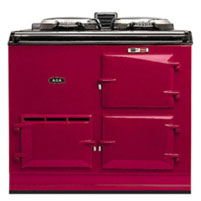
 The classic Aga cooker has also benefited from design development. For the first time, Aga developed a simple 13 amp electric cooker to appeal to customers without large farmhouse kitchens, and it also created the smart, 60s-inspired Four-Two Mini special edition for cramped city flats.
In 2007 it has added value to the electric models with a remote controlled programming system that caters for busy lifestyles by switching the Aga into a power-saving ‘slumber’ mode when the owner is out of the house.
The new ranges have allowed Aga to weather tougher trading conditions, with profits rising by 14 per cent between 2003-04 and 2005-06 and exports up 38 per cent in the same period. Work on the cookware range delivered strong results, with sales in the category leaping from £2million to around £7million in four years. The re-invigorated Rayburn range has been well placed to capitalise on customers’ growing environmental awareness, with solid fuel models making a strong comeback. They made up just 13 per cent of total sales three years ago but now comprise 37 per cent. ‘Giving Rayburn its own identity has undoubtedly helped us take advantage of the growing demand for sustainable products,’ says Geoff Harrop.
The company says Designing Demand helped it not to be complacent. Harrop says: ‘The programme has been a catalyst. We are a very successful company, but when you’re successful you can be arrogant and Designing Demand helped us focus on some of the basic principles of assessing our brands.’
 The branding work has had a lasting influence on thinking across the company, he adds: ‘We have a template system for what we put our name on that is now ingrained.’
Aga’s investment in design continues, with a wide range of projects underway, overall design spend up on pre-Designing Demand levels and ‘product development more active than ever’, according to Harrop.
Summing up the programme’s impact, he says: ‘We were already very committed to design, but even in our case Designing Demand provided a catalyst for reappraisal and new thinking.’
